

Why Bodybuilders and Yogis Are Resilient “Beginners”
Attempting to really strength train without a sound foundation is like playing a game of Jenga with one block on the bottom. It is worthless to attempt to develop something sturdy on top if the base can’t handle the load. When looking at athlete readiness, and setting athletes up for success in a program that involves progressive overload, there are 5 Basic Laws of Strength Training that help serve as a checklist
- Develop Joint Flexibility
-
Develop Tendon Strength
-
Develop Core Strength
-
Develop Stabilizers
-
Train Complex Movements
What most stands out as you read that list?
For us, it’s that ‘Train Complex Movements’ comes in all the way down at number five, meaning it is not of major focus for athletes new to weight training and progressive overload. Practically speaking, these laws serve as a prime example of why we should not and do not put new members under heavy barbell lifts right away. As coaches, we need to make sure one through four are adequately trained and developed before we begin the focus of training the complexity of the movement.
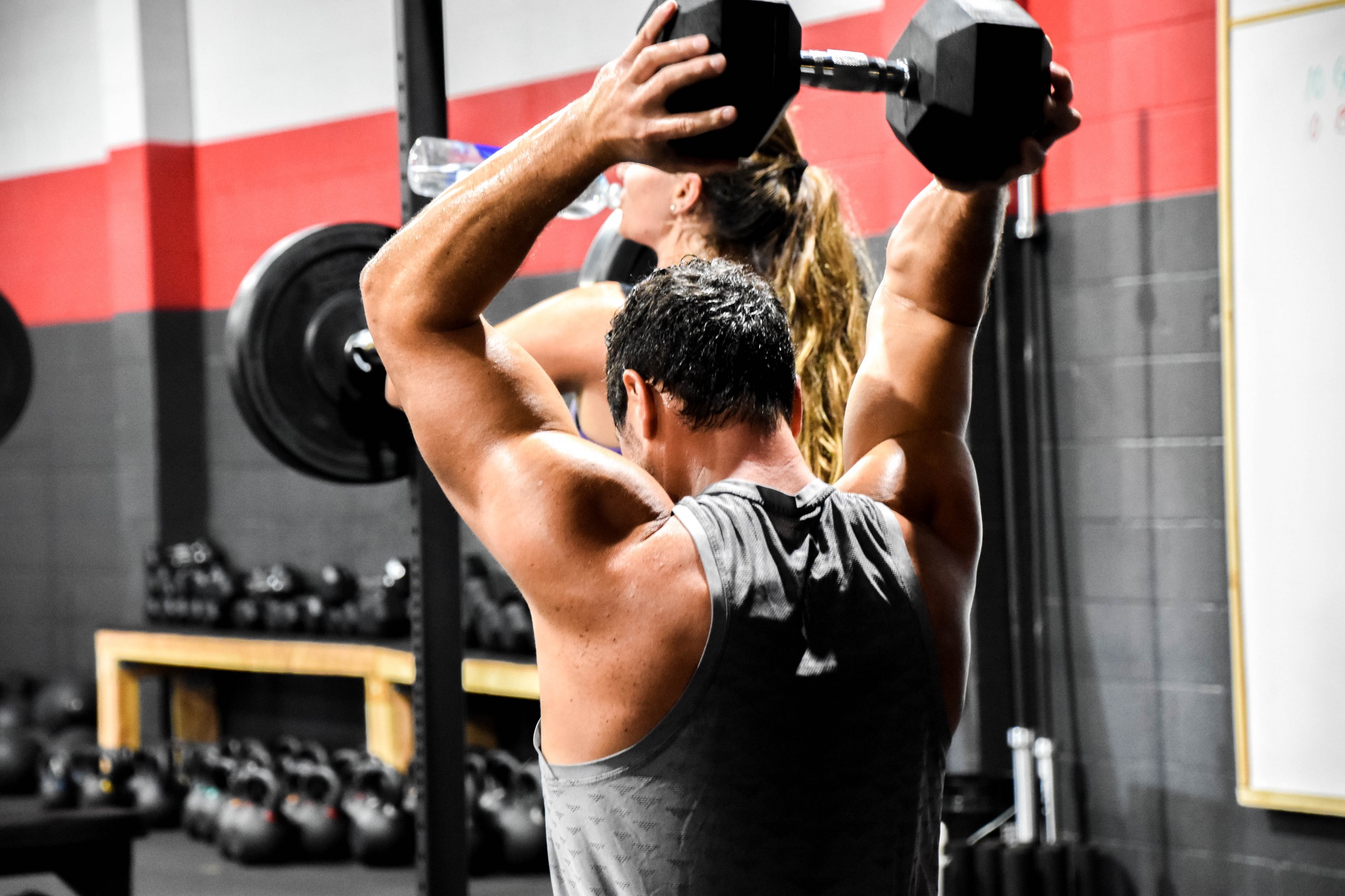
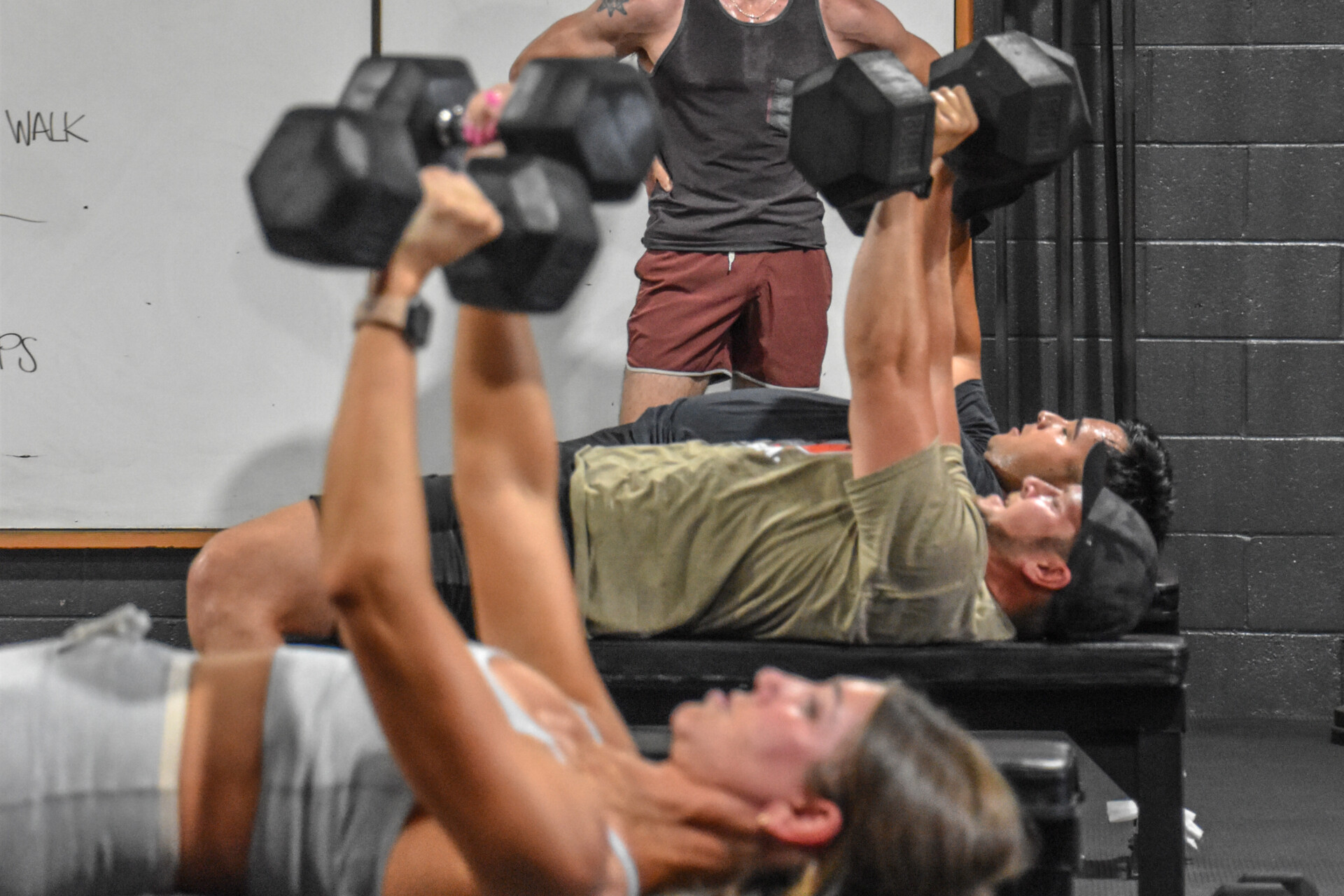
A lot of you likely saw bodybuilders in the title and did a double take. A functional fitness gym talking about the merits of bodybuilding? Well, yes. In fact, bodybuilding protocol has been a part of our training since 2011, back when it got you laughed at in the FF world, not embraced. In order to understand its merits, it’s important that you change the lens in which you view bodybuilding. Too long have we viewed these practices as only being for show, when in reality, they are just as much for go when applied correctly. In the range of 8-12 reps at below 60%, while we are developing gross motor patterning in the squat with a front loaded kettlebell (goblet squat), we are simultaneously building the structural muscle of the athlete, the flexibility in the joints, strength in the tendons, the core, and stability demands the athlete will need to take on more challenging tasks. We are quite literally building the body.
A deadlift creates a high degree of torque on the lumbar vertebrae. A new athlete with no kinetic awareness, core stability, tendon strengthening, or hinge loading experience is going to jump the important development of the musculoskeletal system (Law #1 – #4) and go straight into nervous system training (#5: Train Complex Movements), a mistake that invariably overloads it prematurely and asks for injury in either the short or long term.
They have jumped into function without training structure.
This phase of higher volume training of lower intensity is known as the extensive method training, whereby we build the foundation for the greater demands to come during the heavier, intensive method training. Because connective tissue takes longer than muscle tissue to adapt, we must be careful that we don’t confuse a few sessions of structural building as fully complete. It can take several weeks (sometimes months) for the connective tissue to catch up with the muscle tissue, so slower structural development is always better, especially if someone is a total beginner to loading.
This is why higher rep, muscle oriented rep schemes are always our default training option and we we reserve the low rep, maximal output training option for those adequately prepared who are specifically training for a performance oriented goal.
The reason why new members come to us with either a yoga or a bodybuilding background adapt to our training very quickly, is because their internal structure is already developed very well. Items one through four on that list above have been crossed off and they are often instantly ready for more advanced stimulus faster than a lot of folks. If you are coming to us with not much of a background in either, that is quite okay! Most don’t. Just take your time, develop slowly, and spend a few months in the middle of the board.
-Dave
Wednesday, 10.28.20
PSC
First:
6 Pull-Ups
16 Bulgarian Split Squat
(x16 Min)
Then:
8 RKB Swings
12 Archer Rows
12 Ballistic Lateral Step-Ups
30 Mountain Climbers
150m Run E.O.R.
(x18 Min)




Leave A Comment
You must be logged in to post a comment.