The Science Behind Our Barbell Program Design
In every month, we select two main lifts where we apply concentrated focus. Two, because we believe in the scientific principles of Minimum Effective Dosing and the concept of more focus into less.
Keep in mind that in any given week we’re usually wielding a barbell in at least 60-75% of the days, but not all of those efforts are strength-focused. For example, we could have barbell rows in a 10:1 day which would be a little bit more muscle and physique focused, or we could have hang cleans in a fast moving circuit which is going to be a little more conditioning based.
Today, we’re talking about the days where we isolate a strength lift to a first tier and the two primary considerations for why they are chosen:
1. Pairing Strength vs. Power
Athletic and strength movements exists across a continuum. On the far left of that continuum, is absolute strength (powerlifting: squat, bench, deadlift). Next, is strength-speed (weightlifting: clean and jerk, snatch), then speed-strength (kettlebell swing), then absolute speed (sprinting). For a complete breakdown, make sure to give this article a read.
Essentially the spectrum moves left to right going from heaviest and slowest to lightest and fastest, each with their own unique physiological benefit towards getting you strong and fit. Absolute strength will recruit a maximum amount of motor units, whereas strength-speed is focused more so on speed of force generation: how quickly we can recruit those motor units into action, aka, power. This is why a 5R back squat will train strength in a slightly different manner than a 5R hang power clean. The former is slow and grinding, the latter is fast and explosive.
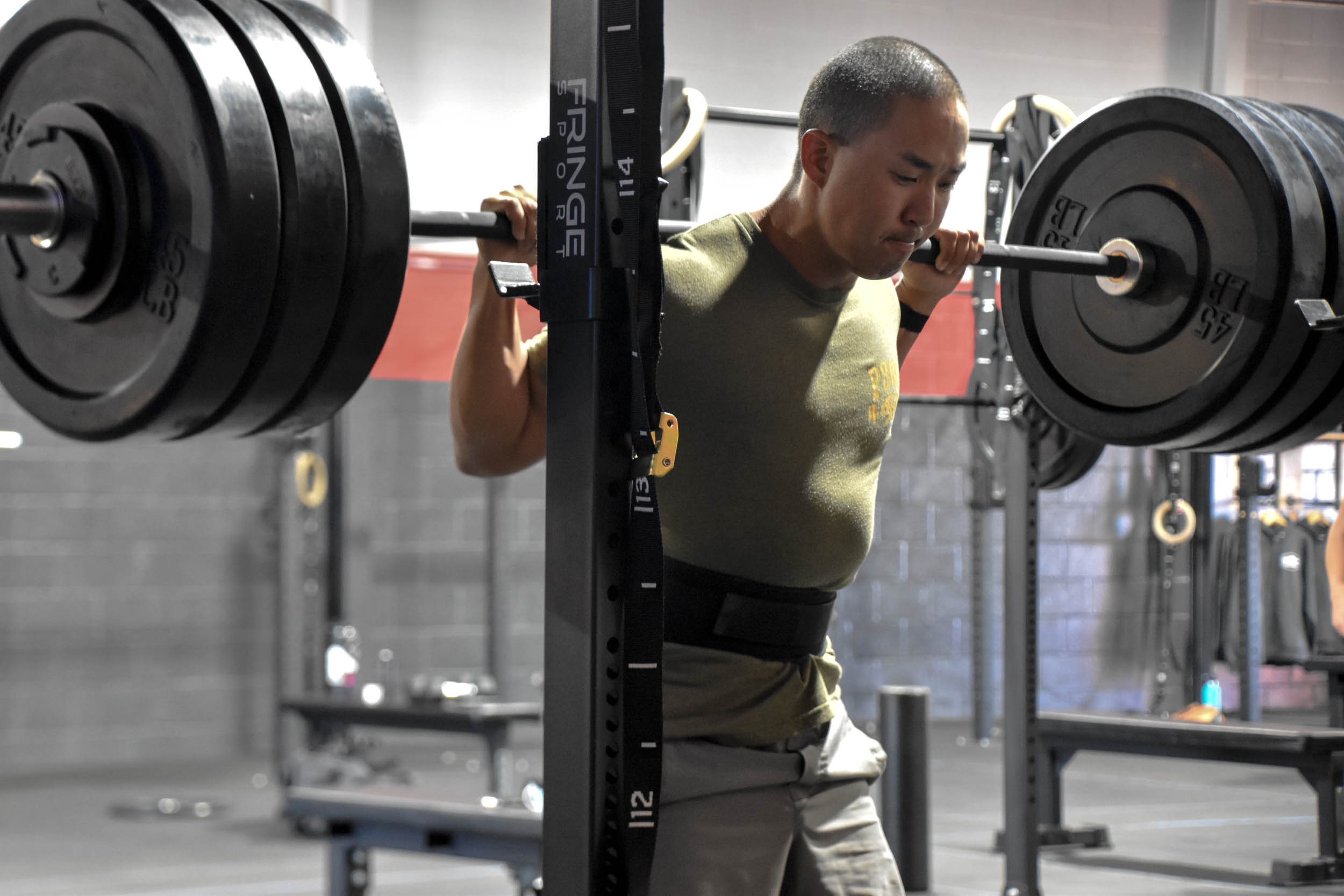
In most programming months, there will usually be (1) absolute strength lift and there is (1) strength-speed lift for balance. For example, this month we have Olympic lifting for speed strength and the front squat for absolute strength. This way, our central nervous system that’s responsible for recovery is never overtaxed in a given week. It’s our fail safe for a potential individual overdose.
2. Pairing High vs. Low Eccentrics
There are three phases to movement.
- Eccentric (lowering the weight)
- Concentric (lifting the weight)
- Isometric (holding the weight)
From a strength building and muscle building perspective, the eccentric component is highly valuable and some consider it where the majority of results occur. Eccentric muscle activation is up to 40% greater, so the downside to it being hugely beneficial for performance and body comp changes is that is where most injuries occur, and it is what beats you up the most. You need lots of recovery following a grueling eccentric day. Ever notice how you are brutally sore after some heavy barbell lunges? Because of how slow we move in the lowering phase of a lunge.
Absolute strength movements produce a very taxing eccentric component to them. Strength-speed movements (weightlifting: clean and jerk, snatch) have very little eccentrics to them. They do not beat you up in nearly the same capacity as the absolute strength focused powerlifts, so by pairing them, you can hit a hard squat day and 48 hours later hit a hard hang clean day and be no worse for the wear from a CNS perspective.
Ultimately, our philosophy is quite simple. Minimal lifts for maximum focus and output (and also because we aren’t a strength gym, we’re a strength and conditioning gym). Pairing combinations that compliment one another physiologically rather than compete.
-Dave
Wednesday, 3.3.21
PSC
First, 5 Rounds
10 Front Squats
20 DB Half Kneeling Row @3010
(x20’)
—–
Then
6 1¼ DB Front Squat
10 DB Incline Plank Rows
30 High Knees
100m Run
(x12’)