


The 3 Levels of Become More Nutrition
There is not another topic where success is so simple, yet made so complicated for no reason. The good news is that creating successful nutrition is not the complicated beast you likely believe it to be. The bad news is that it doesn’t work if you don’t adhere to it. The magic is in adherence, not formula. People mostly fail because they are either inconsistent, or they lack the commitment needed to see it through until you get to the point of long term sustainability (typically around 12 weeks of habit and you’re good). Those who are successful are the ones who commit. Accordingly, our Become More Nutrition protocol is designed with adherence simplicity in mind and to progressively increase your results the further you climb.
The program consists of three levels.
- Foundation: Habits
- Level 1: Meals at Home
- Level 2: Caloric Intake (Advanced)
- Level 3: Macro Intake (Very Advanced)
Just as you wouldn’t hop onto the mat with a black belt as a beginner in Jiu Jitsu, you wouldn’t hop right into Level 3 macro tracking until you learn everything before it. Each level becomes more involved and advanced than the one before it, and like any program with levels, it’s important you master every level before making the next jump. The reality is that most our nutrition clients find huge success just in the Foundation and Level 1, and few really need to advance beyond that. For those with serious or high level physique or performance goals, Levels 2 and 3 are where you will find the next gear of progress.
Foundation: Life Habits
Water, sleep, weekends.
If you are not getting enough sleep, water, and whole foods in your diet it makes little sense to start anywhere else but here. We know what you’re thinking. You see this, and you think this is boring and there is no way that water and sleep will help me lose weight. You want to skip right to the good stuff. Totally get it, but allow us to counter that with the following information:
WATER
A 2014 study by the Swiss Department of Medicine showed that drinking water created an immediate increase in energy expenditure, burning between 2 and 3 percent more calories than usual in the 90 minute window that followed.
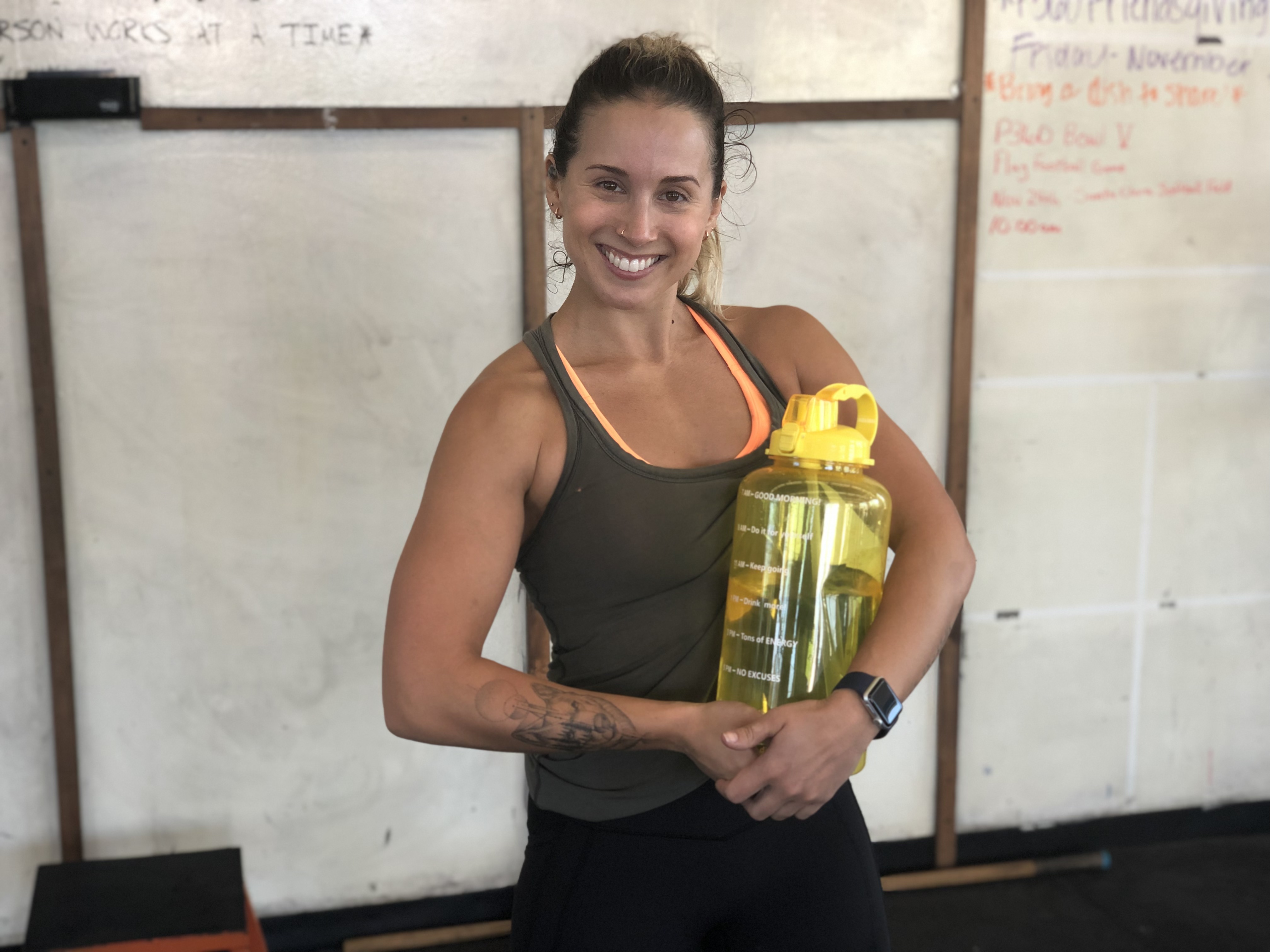
It’s best to consume 1 oz of water per kg of body weight. To calculate your weight in kg, simply divide your body weight in pounds by 2.2.
180 pound person / 2.2 kg = 81 kg
81 kg = 81 daily ounces of water
SLEEP
Studies suggest that people who sleep fewer than 6 hours per night gain almost 2x as much weight over a 6-year period as people who sleep seven to eight hours per night. In fact, bad sleep can decrease caloric burn 5-20% the entire next day. Get your sleep in check and you’ll have adequate hormonal foundation to burn fat day after day.
WEEKENDS
Weekends sabotage most otherwise sound nutrition plans. If you nail your Monday though Friday but are an utter shit show on the weekends, you will never see the results that you want. Period. It’s straight math. Here’s what we mean:
Assume that you need to eat 1,900 calories for steady fat loss and you achieve the following:
- Monday – 1,900 calories
- Tuesday – 1,900 calories
- Wednesday – 1,900 calories
- Thursday – 1,900 calories
- Friday – 2,800 calories
- Saturday – 3,300 calories
- Sunday – 2,700 calories
You are actually in a weekly surplus of 3,100 calories, thus completely negating your Monday through Friday afternoon progress. Weekends matter. They don’t have to be perfect, but they can’t be disasters.
LEVEL 1A: Make meals at home
Once you have mastered adequate sleep, hydration and have your weekends mostly in check, it’s now time to focus on your food environment. When you make meals at home you achieve two things. The first is that you immediately reduce your caloric intake. Foods prepared by restaurants often have 20% more calories than foods made at home because they include unnecessary amounts of butter and oil, not to mention they are often much bigger portion sizes than you need. The second is that you begin to take ownership, something that cannot be understated. Without learning ownership of your food in Level 1 and becoming a true master of your domain, you will never have success at Levels 2 and 3, so it’s imperative you learn to be the master of your domain before you try and get precise with it.
If your diet is garbage, don’t try to change it. Just change where it’s made and how you eat it. So even the worst diet offenders can see major results just by cutting down their meals out and increasing their home meals.
LEVEL 1B: Make meals at home + quality whole foods
Once you feel comfortable in the kitchen, the next step is to make meals that predominantly consistent of the following foods:
Proteins:
- Poultry, Beef, Pork, Bison (90% or leaner)
- Lean Poultry Sausage
- Seafood, Shellfish
- Eggs, Egg Whites
- Plain Greek Yogurt
- Cottage Cheese
- Plant Based Meat Products
- Tempeh (plant based)
- Lentils (plant based)
- Protein Powder
Carbohydrates:
- All Potatoes
- All Rices
- Grains
- Quinoa
- Oats
- Beans, Legumes
- Whole Grain Bread, Pasta
- Fruits
- Plain Non-Greek Yogurt
- Corn
Fats:
- Avocados
- Olives
- Nuts, Nut Butters, Nut Milks
- Butter, Ghee
- Hard Aged Cheeses
- Seeds
Veggies:
- Any, as much as you can.
LEVEL 2: Track calories
We want to take another pause and remind that you that this stage may never be for you, or even needed for you! It takes certain brain and personality types to handle caloric tracking well, and it also needs to pair with those of you with very high performing goals. Single digit body fat for men, sub 17% for women. But for those of you with those goals, this is a fine next step. After you establish the ability to prepare meals at home with quality ingredients for about four weeks, then it might become a good time to begin monitoring your caloric intake.
Here is how to calculate your daily needs based on goal:
FAT LOSS
(Your Body weight in pounds x 11-13 activity multiplier) = Your Daily Prescribed Calories
For example, if Jane weighs 153 pounds then she needs to eat 1,683 – 1,989 calories per day.
MUSCLE GROWTH
(Your Body weight in pounds x 15-16 activity multiplier) = Your Daily Prescribed Calories
MAINTENANCE
(Your Body weight in pounds x 13-14 activity multiplier) = Your Daily Prescribed Calories
None of these are ever going to be a precise science since your body type and genetics both matter, but they are all excellent starting points from which to embark. Strive to hit your caloric prescription 80% – 85% of days and you will see results.
Consider purchasing a digital food scale and tracking your calories into an app like MyFitnessPal or MyMacros+.
LEVEL 3: Track macros
After about four weeks of successfully hitting your caloric goals, the final cherry on top is to take your calories one step further and break them down into precise macronutrients. This step is only needed for a small handful of folks who wish to get as lean as possibly, roughly under 15% for women and 10% for men.
Here is a general estimate of how to calculate your macros:
- Protein = 1 gram per pound of body weight
- Carbs = 1-2 grams per pound of body weight
- Fat = Your body weight x 30-40%
Someone who weighs 175 pounds would be looking at the following starting point for fat loss:
- Protein = 175 g
- Carbs = 175 g (1x body weight)
- Fat = 50 g (30%)
For muscle growth a person of the same weight would be at:
- Protein = 175 g
- Carbs = 300 g (2x body weight)
- Fat = 70 g (40%)
You’ll need to track and monitor and experiment at different ranges for a few weeks before you can ultimately see which range works best for you.

In summary,
- Create a foundation of healthy hydration, sleep, and weekends.
- Make meals at home with quality ingredients for four weeks.
- Focus on reaching your prescribed calorie count for four weeks.
- Focus on reaching your prescribed macros for four weeks.
All in all, if consistent you are looking at six weeks to noticeable change, three months to major change, and six months towards complete transformation. For our complete library of Become More Nutrition protocol, go here.




Leave A Comment
You must be logged in to post a comment.