

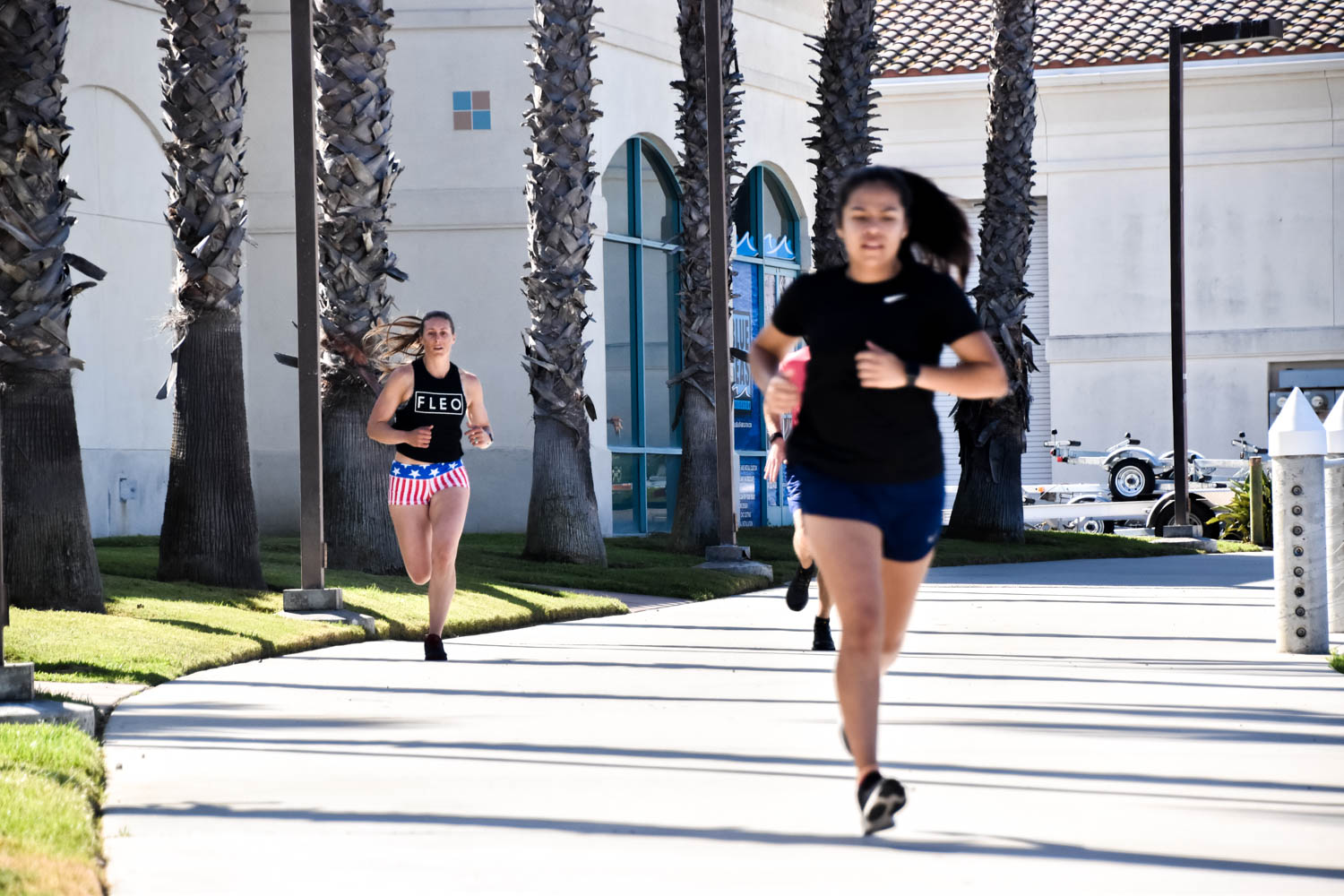
How to Run Faster
by Maria Alcoke
I’m writing this article at 22 weeks pregnant, and while at the moment I don’t feel particularly ‘speedy’ or ‘agile’, I do have quite a bit of insight into this topic that I wanted to share. Prior to transforming my body into an oven to cook up a sweet little human, my main focus at P360 was speed and agility, complemented by strength (as we’ll discuss being a large component of speed).
Here are some specific movements that I focused on during the time I ran a 5:40 mile, a 2:38 ½ mile, and 3:30 Boston qualifier.
Sprint Intervals
80m, 200m, 400m and so on up the ladder. The longer the distance, the more you move away from max effort sprinting and towards sustainable endurance, so tailor your distance to your goal accordingly. Sprinting is the runner’s version of a 1-rep max lift attempt, your body is working at peak power, force and contraction to propel forward as fast as possible. This kind of training targets our fast-twitch muscle fibers, those responsible for power, athleticism and speed.
Another huge benefit of the sprint is the involvement in our arms, especially our lats, which our upper body’s gateway to power. Unlike distance running where your arm act more as pendulums to keep you in balance, in sprinting your arms become a source of power and propulsion. Think of ‘pumping’ your arms in the forward direction that your body is moving. This might sound like a ‘no-shit’ tip, but I cannot tell you how many times I see runners swinging their elbows from side to side, completely destroying the alignment of their running stride. Whatever your upper body does, your lower body will follow. Focus on fast feet, landing on the ball of your foot, allowing your arch to act as a spring to propel you forward.
In a distance effort, our foot placement should be directly under your center of gravity and upon contact with your ground, think of a pressing motion, making this movement explosive.
In an all-out sprint, our heel should ‘kiss’ the ground so as to avoid any heel pounding. Ideally, we want a triple flexion / triple extension position, where the lead leg is in triple flexion (ankle, knee, hip) and the back leg is in triple extension.
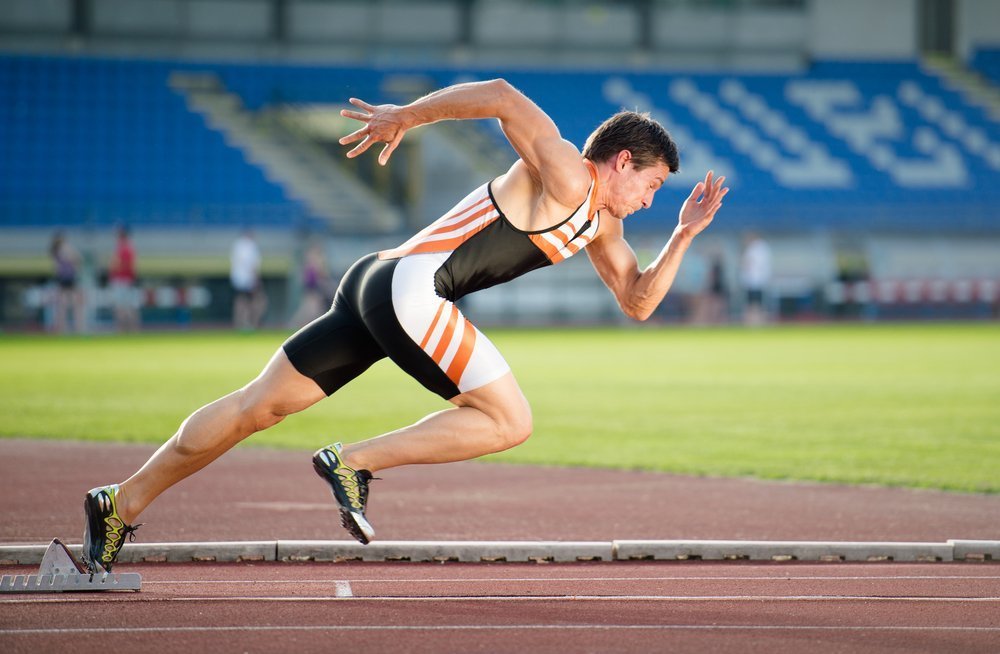
Always make sure to account for adequate recovery when performing sprint intervals; let your heart rate drop slowly before performing another round. You don’t want to turn a sprint session into jogging. Think quality of sprints over quantity in any given workout.
Plyometric & Ballistic Work
Box jumps, broad jumps, even explosive burpees or double-unders can provide benefit to speed as it’s another way for our body to tap into our fast-twitch muscles and phosphocreatine fuel system, the tank responsible for the first few seconds of all out power.
Double-unders can be a great tool for teaching the fast contact with just the toe and upward propulsion. It is very taxing on our power system and the kind of “light” contact with the ground will have some benefit to your ability to propel forward, or cut if you are working on agility, as well.
Regarding box jump, you don’t need to be jumping the highest plyo box to benefit from this exercise. At a lower height, you can really work your speed off the ground until you are comfortable performing small sets at a higher percentage of your max jump. Aim to land softly toward the middle of the box, don’t just graze the edge with your toes or let your heels fall off the front side. Commit to the landing and stick it with power.
Glute and Hamstring Barbell Movements
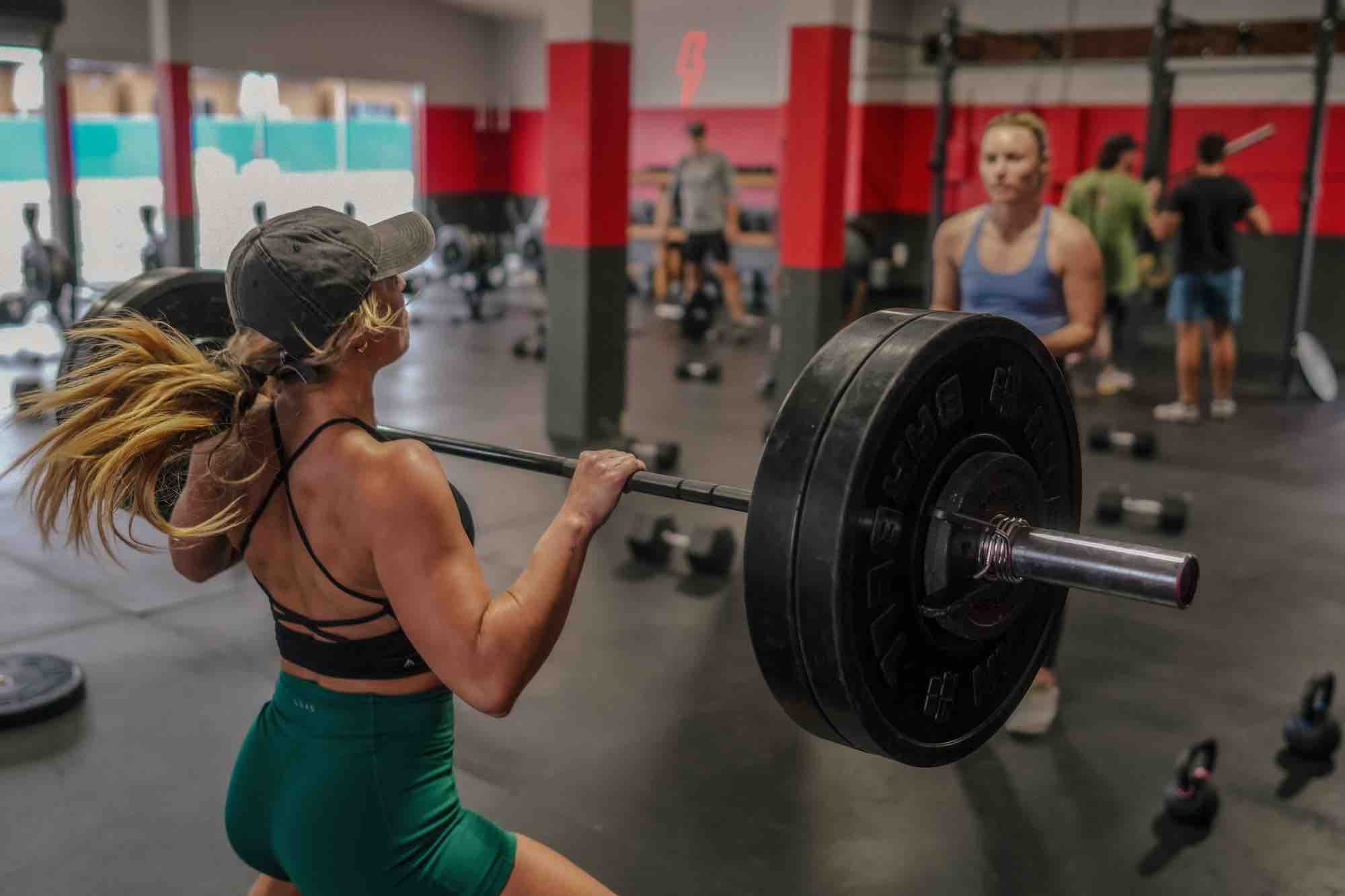
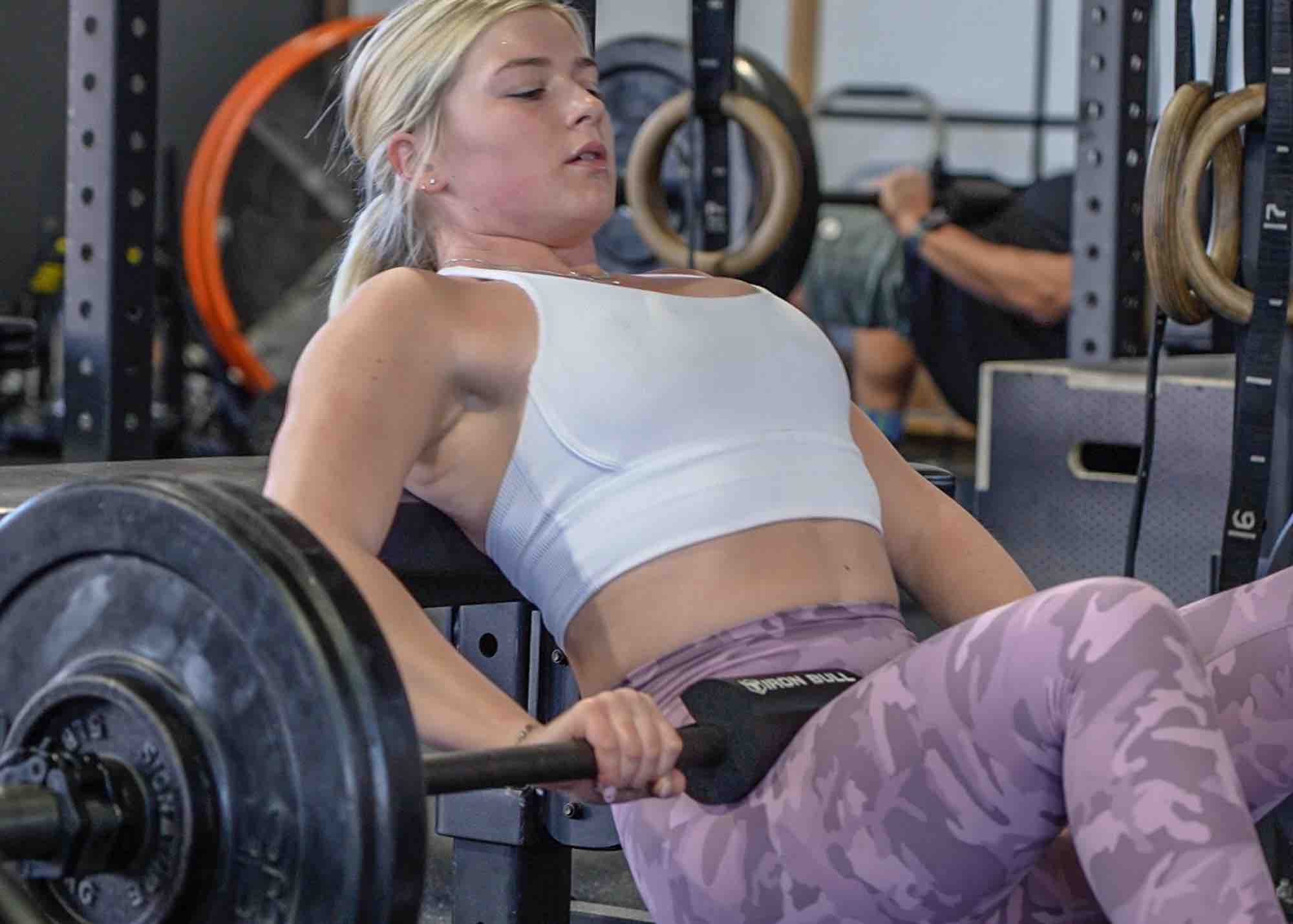
If training at P360 has taught us anything, it’s this: the more powerful your muscles, the greater transfer it will have to any other sport or athletic hobby you enjoy. Take any sprinter and their strength routine almost always incorporates heavy barbell lifts with a focus on the posterior chain.
Olympic lifters (who spend lots of time in rock bottom squat positions) carry with them large lower quads and VMO muscles. If you have been around the gym a while, this is a “duh” statement. Nobody who routinely does quarter squats has big legs! The problem is that sprinters tend to work better with more of their total leg mass around their upper thighs and glutes, and not their lower thighs. Excess mass on the lower thigh is going to not assist in pushing ground horizontally, probably doesn’t help much with vertical force production in the rigid leg positions sprinters work in. It also is going to make things more costly from a biomechanical standpoint as it can produce more distal weight on the leg, relative to the hip joint. – SpeedEndurance.com
Deadlifts, Romanian deadlifts, box squats above parallel, the GHD machine and lunges will all help your maximal sprinting speed.
Finally, a few rules of thumb when you are focused on training to increase speed and agility.
Always be properly warmed up before beginning any kind of speed training. Allow your body at least 5 minutes of movement before breaking into an all out sprint. This could be jogging at a light pace, using the rower, or doing light step ups or body weight squats.
Aim for speed work 2-3 times per week and avoid back-to-back speed interval days. Remember, we need rest to let our progress settle in, regardless of the training goal.
Don’t forget to hydrate and refuel. Any kind of speed training is likely to rev up your metabolism and as a result, you want to be refueling properly to reap all the benefits of your hard work. Most of us are not getting enough water throughout the day. Hydration is key in aiding your muscles in recovery after an intense workout so make a point to carry a bottle around with you.
Stretch and recover. I highly recommend a consistent stretching routine or yoga to keep your muscles from over-tightening.
Consider a little healthy competition. I remember I had major anxiety about running the mile for time. I had expectations for myself. I knew I had the endurance, but did I have the speed? After dialing in my training it was finally time to see what I was made of. I remember getting lined up before the run and I asked a couple friends in class what their previous times were. I wanted to run a 5:45, so I scoped out a buddy who had already accomplished that time and I basically chased them the entire distance. He finished 15 seconds faster than his previous time and I was able to beat my goal by 5 seconds. I can guarantee I would have not been able to run that time on my own. We’re lucky to train with such a supportive community of other athletes, everyone pushing each other to meet their goals. Never underestimate the power of getting pumped up by your peers!
Specify your goal. Do you want to improve your mile? 5k? Half marathon? Short distance sprint? Having a specific goal will allow you to dial in the focus in your training. Rather than“I want to be faster”, consider how you will measure that or speed in a 5k is a different style of training than speed in a sprint. Setting tangible, attainable goals is the first step down the road to increased speed and agility.
Maria Alcoke is a speed and endurance coach at Performance360 in San Diego, CA.
 [/fusion_builder_column][/fusion_builder_row][/fusion_builder_container]



Leave A Comment
You must be logged in to post a comment.