Don’t “Crash” and Burn
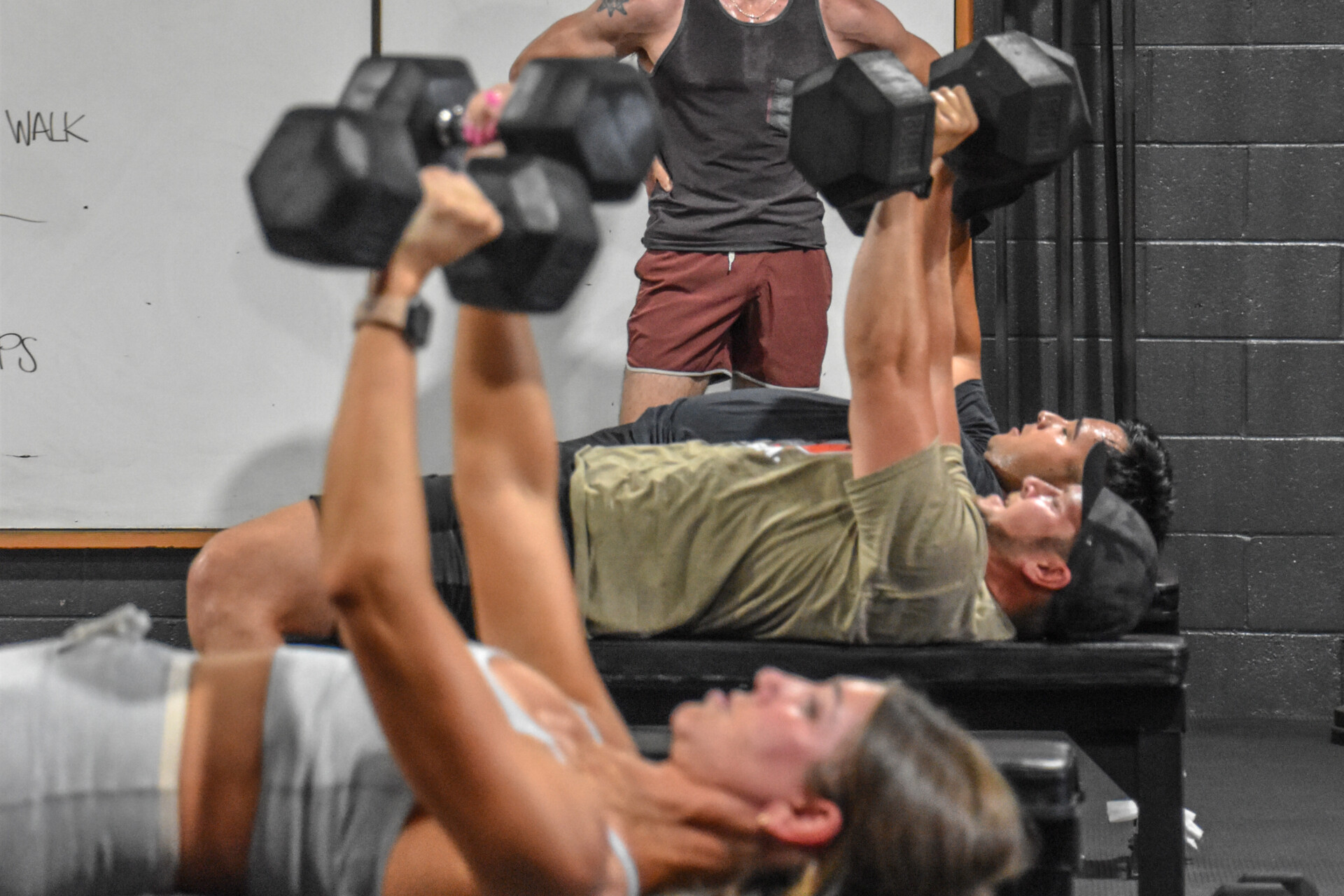
Among many reasons why we don’t prefer heavy lifts to be incorporated in training for time is that, get this, there is a one hundred percent chance that your movement will be externally compromised. How compromised is relative to the individual, but I’ll say this — unless you are a professional, the benefit of you struggling to hold something like say, spinal integrity when you’re also competing for oxygen intake is nil.
Ultimately, it comes down to controlling your eccentrics and the risk exposure when you fail to do so. As you’ve likely learned here, nearly every movement that we do contains an ascent and a descent. The ascent, where were are lifting against the resistance is called the concentric phase. The descent, where we are lowering against the resistance is called the eccentric phase. Think about a back squat. The lowering down is the eccentric and the squatting up is the concentric.
We’ve written many times about the benefit of eccentrics. That’s where we build most of the following:
- Strength
- Injury Prevention
- Muscle
This means that paying attention to how we lower on any and every movement is critical to our progress in all three, and it also means that if you lower in an out of control fashion than you’ll develop substandard abilities in all three, and you’ll risk being set up for injury.
When we don’t control our descent and we “crash” down, we place none of the stress on the muscles and all of the stress on our connective tissue like our tendons and ligaments, which handle stress in that manner very poorly. They are designed to help us shock absorb, not be solely responsible for it. Think about taking a car off road with crappy shocks. Pretty soon, something is going to snap.
Opportunities for epically failed eccentrics are everywhere, but most notably are found in:
- Squats
- Push-Ups
- Pull-Ups
- Ring Rows
- Dips
- Lunges
- Bench Press
Lowering properly is really just about being in control the entire time. You see advanced lifters use “bounce” at the bottom to create a stretch-shortening cycle and you might think, I should be doing that in my lifts. There is a difference between training for an advanced PR and training for daily functionality. Ideally, you should be able to stop at any point in your lowering phase as if someone hit the pause button, and your form shouldn’t collapse. You’ll notice that today we are prescribing a tempo to achieve a focus on the eccentrics with our ring dips. Make sure you pay attention to this and perform it correctly, even if it means you are using some assistance to help.
Own that descent. You’ll see your strength increase in as little as four weeks.
-Dave
Friday, 1.8.21
PB & BAY PARK PSC
4 Rounds:
12 Goblet B.S.S.
5 Chin-Ups @ 3131
12 Paused Lawnmower Row
Max Hollow Press
25-20-15:
Plate GTO
Plate Curls
200m Run
OB PSC
4 Rounds:
12 Goblet B.S.S.
10 Arnold Press
12 Paused KB Lawnmower Row
Max Hollow KB Crush Press
25-20-15:
Plate GTO
Plate Curls
200m Run