Cheat Codes 1.0 — Squats, Swings, and Cardio Machines
Here are some of the easiest ways increase the returns of your time spent in the gym, that can be broadly applied for any person right away in a safe and effective manner.
Goblet Squats: Go up 2 Bell Sizes
The squat is our primary movement pattern at the gym, involving more muscles and joints than any other pattern we perform. While we love the barbell variations of the squat, we should not make the mistake of underestimating the power of the kettlebell goblet squat because one, it’s a more accessible movement than the back squat and two, we work the exact same muscles.
Chances are, you’re leaving meat on the bone when we have them.
Just moving an extra 18 pounds (which is two bell sizes) will yield you an extra 1,800 pounds of work performed in a workout that involves 100 total squat reps. When we accomplish more total poundage in a given workout, we engage more muscles, burn more calories, elevate anabolic hormones, and create faster, more noticeable change in our bodies.
KB Swings: Go Up 3 Bell Sizes
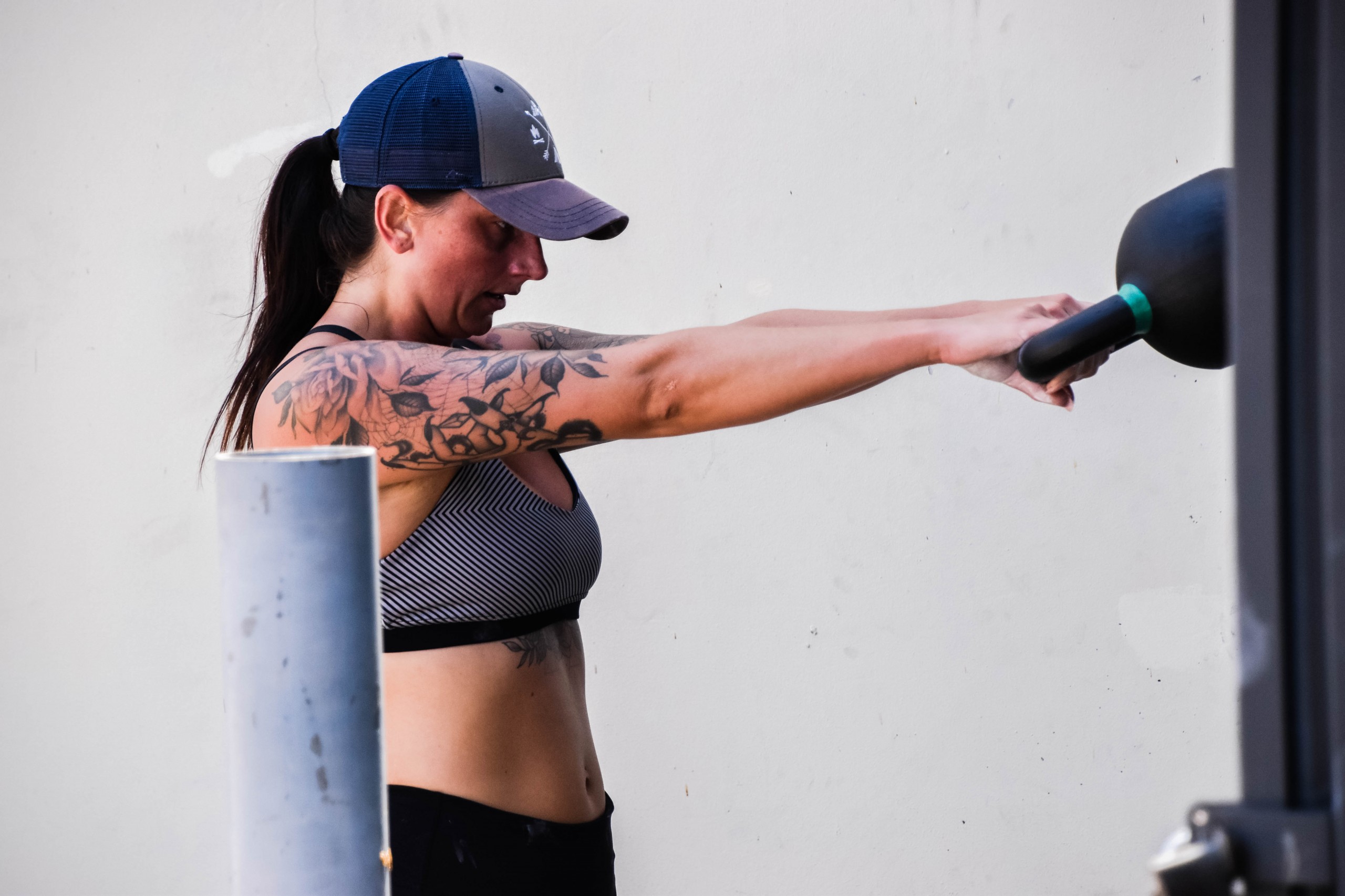
The hinge pattern is much “easier” than the squat pattern. It’s why you can deadlift way more than you can back squat, and the kettlebell swing is the close cousin of the barbell deadlift, believe it or not. Both are hinge pattern which place primary emphasis on our grip and our posterior chain, meaning…you can swing much more than you can goblet squat yet many people choose a similar weight.
Big mistake.
A couple of joyous things will happen when you swing heavier bells. First, swinging a heavier bell will build more muscle in your glutes and hamstrings, making them much stronger and more capable, but also bigger and firmer.
Second, swinging a heavier bell will build global strength in your CNS. What do we mean when we say global strength? Specifically, the kind of strength that has transfer to all other movements. Our grip is our gateway to our CNS, and when our grip strength is built we get stronger in other movements that are similar like pull-ups, farmer walks, and Olympic lifts (that all require grip strength), but we also get stronger in movements that don’t require grip strength simply because we’ve trained our CNS to be better at creating muscle contractions.
Finally, remember that a swing is a total body endeavor, so when we’re swinging more weight we’re applying that across muscles we don’t think about as primary movers in the swing, like arms, core, and back.
Swinging a much more challenging bell is an easy way to cheat code your progress.
Row / Bike: Keep It Total Body
We often forget how much total body work the bike provides, specifically on our arms when we’re really allowing our upper body and lower body to move together. So get those arms pumping and engaged. With both the row and the bike, it’s easy to let either your arms or legs do all the work depending on which one feels more fucked up when you get on it. Keep the total body nature of both at the forefront of their execution and you’ll get a greater muscle activation, greater caloric expenditure, and a more taxing effort on your cardiovascular system.
-Dave
Monday, 3.22.21
PSC
6 Rounds
3-2-2-2-1-1
HPC & Push Jerk
12 HK OH Band Press
(x17’)
—
For 16’
8 DB Cleans
8 Chin-Ups
10 Plate GTO
20 Plate Russian Twists
100m Run